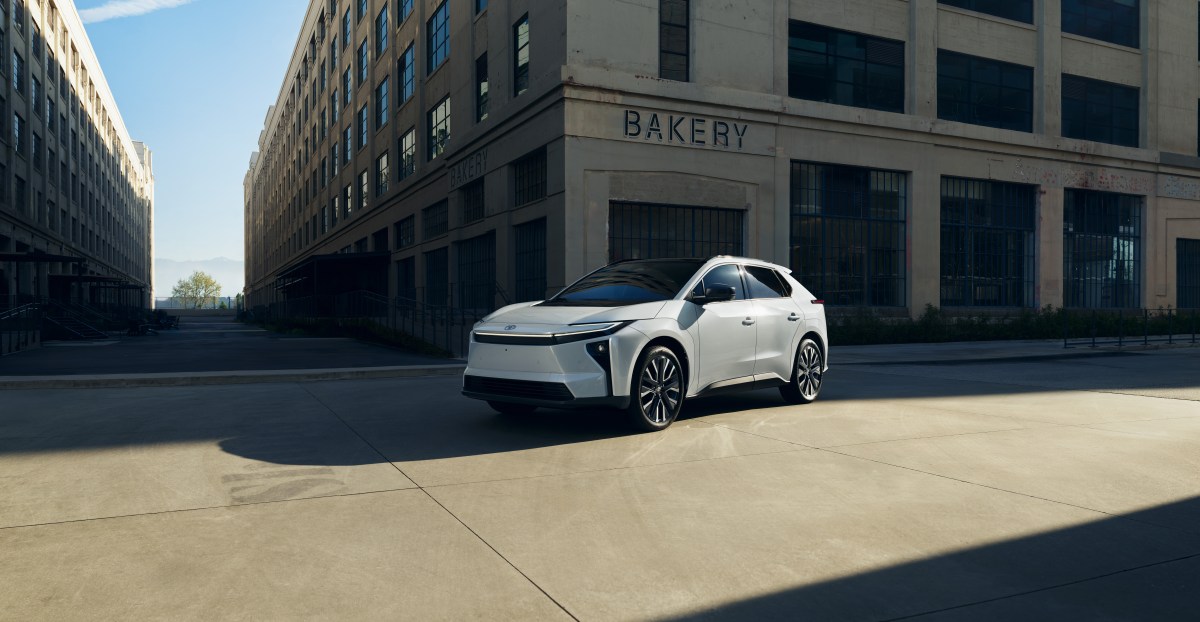
Toyota bZ4X: Unpacking Its Recalls, Range, and EV Strategy
The automotive landscape is rapidly shifting towards electrification, and for a titan like Toyota, the transition is both an opportunity and a challenge. The Toyota bZ4X stands as a pivotal vehicle in this evolution, marking the Japanese automaker's initial foray into the mass-market battery electric vehicle (BEV) segment. As the inaugural model in its "beyond Zero" (bZ) series, the Toyota bZ4X represents a bold statement of intent, yet its journey has been characterized by both promising advancements and notable setbacks. Understanding the bZ4X means delving into its design philosophy, its evolving range capabilities, and the critical recalls that have shaped its early reputation, all within the broader context of Toyota's ambitious EV strategy.
The Toyota bZ4X: A Bold Step into the EV Future
Unveiled in November 2021 with production commencing in mid-2022, the Toyota bZ4X is more than just another electric SUV; it's a testament to Toyota's commitment to a carbon-neutral future. Built on the innovative e-TNGA platform, co-developed with Subaru, this compact crossover SUV showcases Toyota's engineering prowess applied to a new frontier. The "bZ" in its name, meaning "beyond Zero," is not merely a catchy acronym but a foundational philosophy. It signifies Toyota's vision for electric vehicles that offer not just zero tailpipe emissions but also contribute to broader societal benefits, fostering sustainability and a positive environmental impact that transcends mere carbon neutrality.
The nomenclature extends further: the "4" positions the vehicle in the mid-size C-segment, reflecting its approximately 4.6-meter length, while the "X" clearly denotes its crossover utility vehicle body style. This alphanumeric branding, though sometimes criticized for lacking the memorability of traditional badges like Corolla or RAV4, emphasizes the vehicle's functional attributes and its place within Toyota's expanding electrified lineup. The Toyota bZ4X was envisioned as the first of up to seven bZ models planned by the mid-2020s, spearheading a diverse portfolio of electrified powertrains, including hybrids, plug-in hybrids, and fuel-cell electric vehicles, alongside BEVs, reflecting Toyota's belief in a multi-path approach to reducing planetary impact.
Navigating the Initial Bumps: Toyota bZ4X Recalls and Engineering Challenges
The journey of innovation is rarely smooth, and the Toyota bZ4X has encountered its share of challenges. Perhaps the most significant hurdle came in 2022 with a widespread recall concerning insufficiently torqued wheel hub bolts. This critical issue posed a severe safety risk, as it could lead to the wheels detaching from the vehicle, particularly under corrosive conditions. The recall temporarily halted U.S. sales and cast a shadow over the bZ4X's early days, highlighting the complexities of bringing an entirely new powertrain and platform to market.
Further engineering hurdles emerged with 2025 recalls. These included issues with defroster failures, which could impair driver visibility, and auxiliary 12-volt battery degradation. These problems, while seemingly minor compared to the wheel hub bolt issue, compounded initial market hesitancy and contributed to a reported over 90% drop in deliveries. These recalls underscore a crucial learning curve for Toyota. While the company boasts unparalleled success and reliability with its hybrid systems, engineering a dedicated BEV from the ground up introduces distinct challenges related to battery management, high-voltage systems, thermal management, and software integration—areas where even seasoned automakers are still refining their expertise.
Such setbacks, though inconvenient, are not uncommon in the nascent stages of new automotive technologies. They serve as a stark reminder that the transition to electric vehicles demands rigorous testing and a deep understanding of new engineering principles. For Toyota, a company synonymous with quality and reliability, addressing these issues swiftly and transparently is paramount to maintaining consumer trust and ensuring the long-term success of its "beyond Zero" initiative.
Range and Charging Evolution: The bZ4X's Expanding Capabilities
Range anxiety remains a top concern for many prospective EV buyers, and the Toyota bZ4X has continuously evolved to address this. Initially, the bZ4X offered an EPA-estimated range of up to 252 miles for front-wheel-drive (FWD) versions and 222 miles for all-wheel-drive (AWD) variants, powered by a nominally 71 kWh lithium-ion battery pack. While respectable, these figures were soon enhanced to meet escalating market expectations.
For the 2025 and 2026 model years, Toyota significantly upgraded the bZ4X's capabilities. Drivers now have expanded battery options, including 57.7 kWh and 73.1 kWh packs, leading to impressive WLTP ranges exceeding 350 miles in certain configurations. The 2025 XLE FWD Plus model now boasts an EPA-estimated total range of a remarkable 314 miles, while the XLE AWD variant achieves an EPA-estimated 288 miles. These improvements are crucial, offering drivers greater confidence for longer journeys and reducing the need for frequent charging stops.
Beyond extended range, the Toyota bZ4X has also seen improvements in its charging infrastructure. Faster DC charging rates of up to 150 kW significantly reduce downtime, making long-distance travel more practical. Furthermore, the integration of North American Charging Standard (NACS) ports ensures broader compatibility with the rapidly expanding charging networks across the continent. These enhancements are vital for making electric vehicle ownership more convenient and accessible. To dive deeper into these enhancements, explore Toyota bZ4X: Improved Range, Features, and Fast Charging.
Tips for Maximizing Your Toyota bZ4X Range:
- Drive Smoothly: Avoid aggressive acceleration and braking. Gentle inputs conserve battery power.
- Pre-condition Your Cabin: Use the climate control while plugged in to reach your desired temperature without draining the battery on the go.
- Utilize Regenerative Braking: The bZ4X's regenerative braking system helps recover energy. Learn to anticipate stops and let the car slow down naturally.
- Check Tire Pressure: Properly inflated tires reduce rolling resistance and improve efficiency.
- Minimize High-Speed Driving: Aerodynamic drag increases significantly at higher speeds, consuming more energy.
Toyota's "Beyond Zero" EV Strategy: A Holistic Approach
Toyota's approach to electrification, encapsulated by its "Beyond Zero" vision, is distinctive. Unlike some competitors who have pledged an exclusive shift to battery-electric vehicles, Toyota advocates for a diversified portfolio. This strategy acknowledges that different regions and consumer needs may be better served by various electrified technologies, including advanced hybrids, plug-in hybrids, and even hydrogen fuel-cell vehicles, alongside BEVs. The Toyota bZ4X is the tip of this strategic spear, showcasing Toyota's capability in a dedicated BEV, but it's not the sole focus.
The "beyond Zero" philosophy extends beyond simply eliminating tailpipe emissions. It encompasses a broader commitment to reducing environmental impact throughout the vehicle's lifecycle, from manufacturing to recycling, and contributing positively to communities. This holistic view underpins Toyota's measured yet ambitious push into the EV space. While the alphanumeric "bZ" branding initially drew criticism for lacking memorability, it reflects a strategic shift towards a functional and descriptive naming convention, highlighting the vehicles' electrification attributes and their position within a clear series.
Toyota's journey with the bZ4X, from its initial rollout to navigating recalls and enhancing range, demonstrates the company's adaptive strategy. It's a pragmatic recognition of the complexities involved in transitioning an entire industry. By learning from early challenges and continuously improving its offerings, Toyota is laying a solid foundation for its expanded bZ lineup, aiming to cater to a global market with diverse electrification needs.
Conclusion
The Toyota bZ4X stands as a compelling, albeit challenged, pioneer in Toyota's electric vehicle narrative. It represents a significant step for an automotive giant known for its pioneering hybrid technology, showcasing a dedicated commitment to the BEV future. While early recalls and engineering hurdles presented formidable learning opportunities, Toyota's swift responses and continuous improvements to range, charging speeds, and safety features highlight its resilience and dedication to quality. The bZ4X's evolving capabilities, coupled with Toyota's comprehensive "Beyond Zero" strategy, paint a picture of an automaker carefully yet determinedly carving its path in the electric era. As the bZ series expands, the lessons learned and the advancements made with the Toyota bZ4X will undoubtedly serve as crucial building blocks for Toyota's broader vision of a sustainable, electrified future, promising a blend of innovation and reliability that consumers have come to expect from the brand.